+44 (0) 1279 213 504
info@rahal.co.uk
Leo Rover
Your Open Platform for Real-World Robotics
Built for real-world challenges
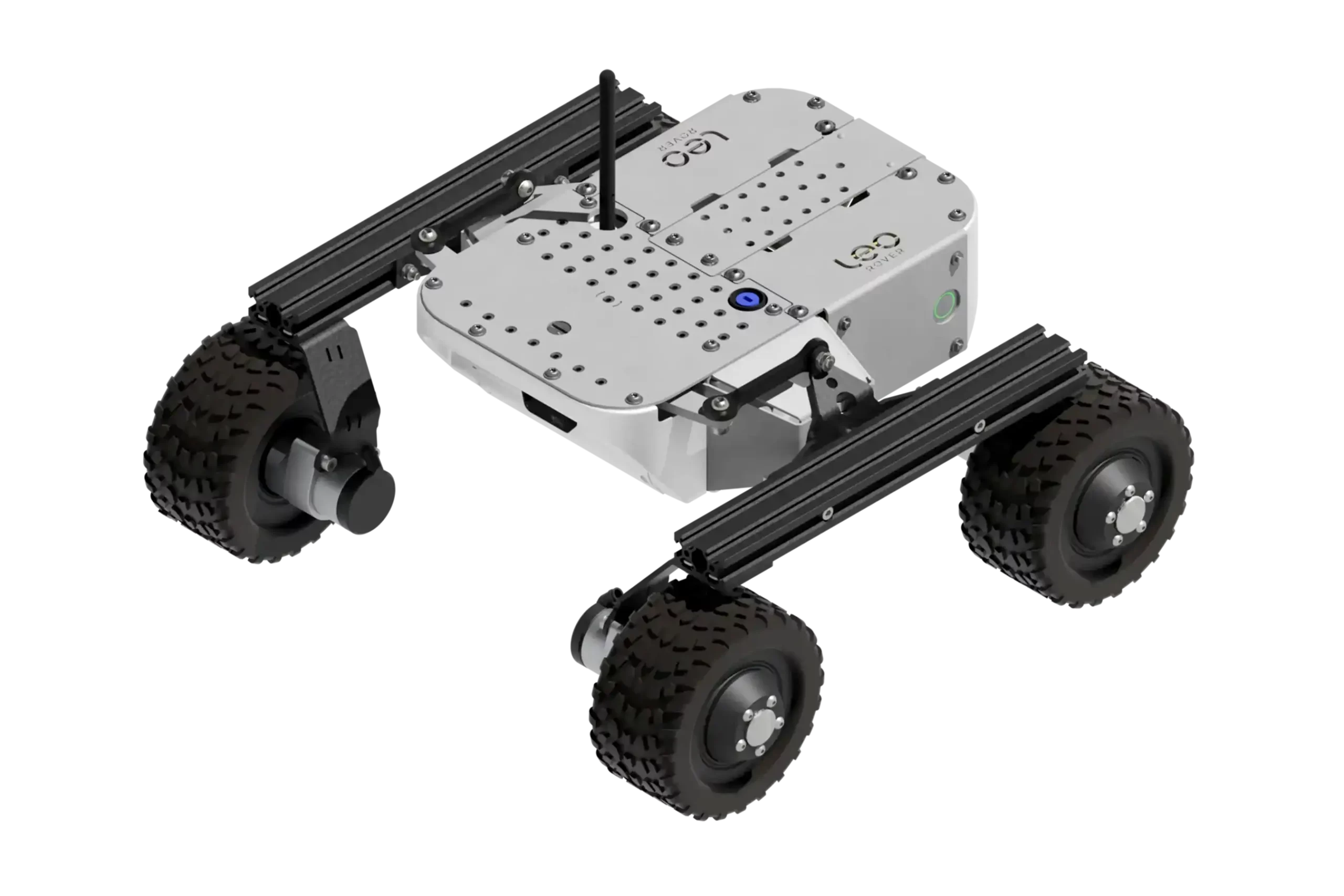
Leo Rover is the rugged, ROS-native substrate for real-world robotics. Engineered for rapid prototyping and field research, it offers the modular flexibility to integrate any payload and the mechanical durability to survive demanding environments. Bridge the gap from laboratory concept to field-ready deployment.
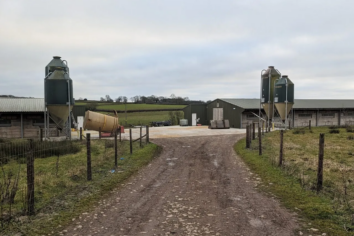
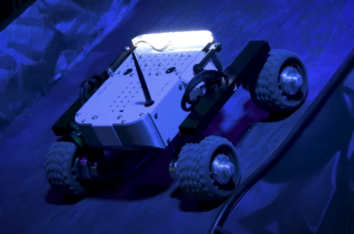

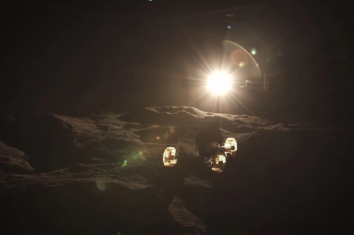
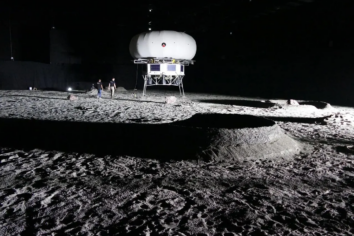
Reach for the stars in Luxembourg
The goal of the Interdisciplinary Space Master program at the University of Luxembourg
Leo Rover Applications

Space Robotics Research
From analog missions in the desert to laboratory testing of lunar rovers. Our platforms serve as high-fidelity testbeds for space agencies and researchers developing the next generation of planetary explorers.

Robotics Research Platforms
Don't let hardware limitations stall your papers. Our rovers are fully open-source and modular, giving you a stable, mobile base for sensors, AI vision, and autonomous navigation experiments right out of the box.

Robotics Education
Move beyond desktop simulators. Give your students a real-world, rugged machine to program. From learning ROS basics to advanced mechatronics, we provide the tools to train the roboticists of tomorrow.

Industry 4.0 Mobile Robotics
Small-scale automation for big-scale efficiency. Use our mobile bases to develop custom internal logistics, autonomous delivery systems, or R&D prototypes tailored to your facility’s specific layout.

Construction Site Monitoring & 3D Mapping
Construction sites are messy and unpredictable. Our rovers thrive there. Use them to automate periodic site inspections, create digital twins, or carry out precise 3D scanning without putting personnel at risk.
Open source | ROS based | Open to community
OPEN_SOURCE
We believe that a robot you cannot modify is not truly yours. Our software and firmware are open to the core, providing the transparency required for R&D. This transparent architecture ensures you are never restricted by proprietary silos, allowing your team to fork, modify, and optimise the stack for project specific requirements. MIT Licensed.
MODULAR_ARCHITECTURE_AND_INTEGRATION
The software environment is specifically designed to act as a central hub for your payloads, offering support for sensors, actuators, and external compute modules. We provide integration tutorials for a wide array of third-party components already documented in our knowledge base, significantly accelerating your integration timeline.
COMMUNITY_ECOSYSTEM
Robotics is too complex to do in a vacuum, so we run our community on Discord. It’s where the actual day-to-day exchange happens—no support tickets, just direct access to our core engineering team and a global network of peers. Whether you’re troubleshooting a niche driver issue, sharing a custom autonomous stack for your PhD, or looking for advice on a specific sensor fusion approach, the Discord channels are where you’ll find people who speak your language. It’s an active space for geeking out over hardware and getting real-time answers from people who have been in the same trenches.
ROS2_FRAMEWORK
Our platforms are not just "compatible" with ROS 2; they are built natively on it. This ensures that your existing libraries, custom nodes, and community packages work out of the box
CONTRIBUTE_AND_COLLABORATE
We invite you to help us improve the rovers. Your pull requests and feedback directly influence the software stack, helping us improve it for the global community.
DOCUMENTATION_AND_SUPPORT
We move beyond being a hardware vendor by acting as an extension of your development team through our comprehensive documentation and human-to-human technical assistance. Our "never stuck" philosophy ensures that when real-world robotics challenges arise, you gain direct access to the engineers who designed the system to help you debug and harden your mission-critical logic. From initial networking setup to advanced system-level integration, our living knowledge base at docs.fictionlab.pl serves as your primary resource for rapid troubleshooting and scaling.
FREQUENTLY ASKED QUESTIONS
How can I recognise if I have Leo Rover 1.8 or 1.9?
The easiest way is to look at the back of the rover and check if ID plate is present. Leo 1.8 doesn't have it. In addition, Leo Rover 1.9 has antenna on the right side of the chassis. Previous versions had antenna on the left.
Has the Leo Rover been to Mars or the Moon?
Unfortunately not, but he did take part in a competition that simulates Martian conditions - the European Rover Challenge.
What is the control range?
The connection range is up to 100 metres. The rover creates its own Wi-Fi access point, but it can also be configured to connect to existing local networks for internet access.
What sensors does Leo Rover have?
By default Leo Rover comes with front-facing camera, IMU and wheel encoders. If you need more, we provide multiple sensor integrations that you can buy to tailor the rover for your specific project.
Why are some components 3D printed?
3D printing allows us to quickly improve the design of plastic parts if necessary. In addition, we provide our customers with CAD files so that they can modify parts according to their needs or print replacements if any parts are damaged. The most important structural elements of the rover are made of metal.
Can I modify the robots?
Yes, it designed to be modified, and you are encouraged to tinker with it and adjust it for your projects. We support a 'Right to Repair & Hack' philosophy, meaning such modifications do not void your access to support.